After millions of years of hunting, gathering, and wandering, humanity entered a turning point so powerful that it reshaped the entire future of our species—the Neolithic Age, also known as the New Stone Age. This era marks the beginning of agriculture, settled life, and organized communities. In simple words, this is when humans stopped surviving from nature and started shaping nature for themselves.
What Is the Neolithic Age?
The Neolithic Age began around 6,000 BCE in many parts of the world (earlier in the Middle East, later in some regions). It ended with the discovery of metals, leading into the Chalcolithic and Bronze Ages.
Key Features of the Neolithic Age:
- People learned to grow crops
- They domesticated animals
- They built permanent houses
- They formed villages
- They developed pottery, weaving, and advanced tools
This era changed the human lifestyle forever.
The Agricultural Revolution: Humanity’s Big Leap
The most defining event was the Agricultural Revolution. Instead of depending on wild plants and animals, humans learned to:
- Cultivate wheat, barley, millet, rice
- Grow vegetables and fruits
- Domesticate animals like cattle, sheep, goats, pigs
For the first time, humans could produce food rather than hunt it.
Impact of Farming:
- Food became more reliable
- Surplus food allowed population to grow
- Extra time led to specialization of skills
- Villages grew into early communities
This stability was completely new in human history.
Permanent Settlements and Village Life
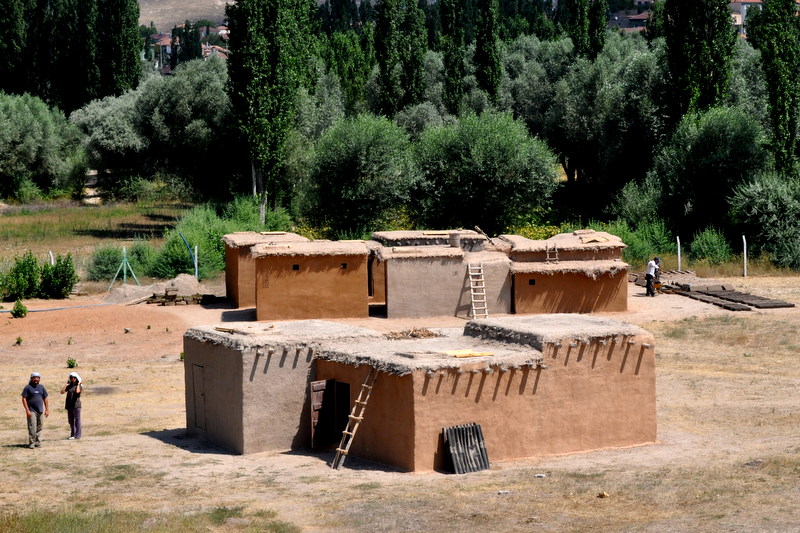
With farming came permanent houses made of:
- Mud bricks
- Wood
- Stone
People stayed in one place for long periods, forming organized villages built around water sources.
Some of the earliest Neolithic settlements include:
- Jericho (West Asia)
- Çatalhöyük (Turkey)
- Early settlements in the Indian subcontinent such as Mehrgarh
Life in Neolithic Villages Included:
- Shared work
- Storage areas for grains
- Communal decision-making
- Animal pens and fields
These villages were the seeds of future civilizations.
Tool Innovations: Polished Stone Tools
Stone tools evolved significantly. Instead of rough flakes, Neolithic people made polished stone tools, which were sharper, stronger, and more durable.
Common tools included:
- Axes and adzes
- Sickles
- Grinding stones
- Mortars and pestles
These tools made farming, cutting wood, and food preparation easier.
Pottery: A Neolithic Signature
Neolithic people discovered the art of making pottery, which was a major breakthrough.
Pottery allowed:
- Storing grain
- Cooking food
- Carrying water
- Preserving surplus
Early pots were simple, but later designs became artistic with patterns, colors, and shapes.
Weaving and Clothing
With settled life came new skills like:
- Weaving baskets
- Spinning thread
- Making cloth from wool, cotton, or flax
Clothing became more fitted and functional compared to animal-hide garments of earlier ages.
Religion and Rituals
Neolithic people had more complex beliefs. Archaeologists have found:
- Stone altars
- Mother goddess figurines
- Burial practices with grave goods
- Early shrines
This suggests the beginning of organized religion and communal spirituality.
The Neolithic Revolution’s Long-Term Impact
The Neolithic Age completely transformed humanity.
Because of this era:
- Villages grew into towns
- Towns grew into civilizations
- Writing, trade, and governance eventually emerged
- Human population exploded
- Humans became creators, not just survivors
The choices made during the Neolithic Age shaped the world we live in today.
Why the Neolithic Age Matters
If the Paleolithic Age was our childhood, and the Mesolithic was our transition phase, then the Neolithic Age was our entry into adulthood as a species. It brought stability, innovation, community, and creativity to human life.
Every farm, every city, every cultural tradition today can trace its roots back to this revolutionary era.